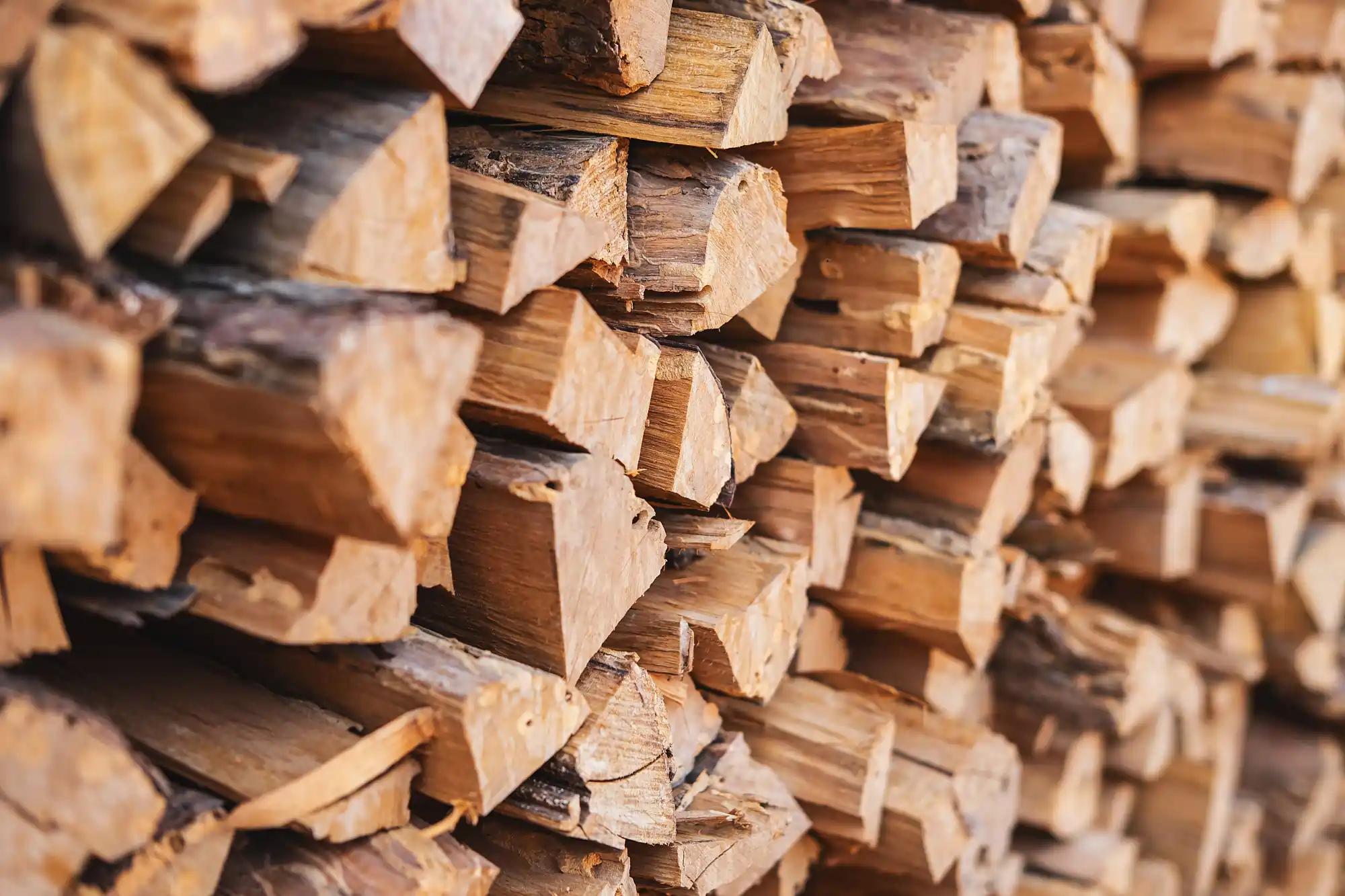
In this article you'll see what the heating value of wood is, how to read the MJ/kg parameters, and which grades will work best. You will also learn how to avoid overpaying for fuel and how to match the fuel to your boiler.
What is wood caloricity and how to interpret it?
The calorific value of wood is the amount of energy you get when completely burning one kilogram of fuel. It is most often given in units of MJ/kg (megajoules per kilogram) or in kWh/kg.
→ If you see the notation "heating value of wood MJ/kg", this means exactly the energy that can be used in the heating process.
Wood in its anhydrous state has a similar calorific value - usually 18-19 MJ/kg. In practice, however, you rarely burn wood completely lab-dried.
Moisture content is of greatest importance. Seasoned wood (15-20% moisture content) usually achieves 15-19 MJ/kg, while wet wood loses up to half of its energy value.
Why does moisture reduce the calorific value so much?
During combustion, energy is first used to evaporate the water contained in the wood. Each kilogram of water requires about 2.44 MJ of energy to evaporate. The more moisture, the less heat goes into the heating system.
This is why the calorific value of firewood is closely related to its seasoning.
Calorific value of wood - table of the most popular species
If you're comparing vendors' offers, you'll find it useful to have an approximate caloric table of wood, which is a summary of energy values for seasoned wood (moisture content of 15-20%):
- Hornbeam - about 19.5 MJ/kg
- Beech - 18.5-19.2 MJ/kg
- Oak - 18.0-18.6 MJ/kg
- Ash - 18.2-18.9 MJ/kg
- Birch - 16.5-18.3 MJ/kg
- Pine - approx. 17.0-17.4 MJ/kg
- Spruce - about 17 MJ/kg
- Poplar - 14-15.5 MJ/kg
The differences between deciduous species are not huge, but the density of the wood affects the amount of energy in a spatial meter. Hornbeam or beech contain more mass in the same volume than pine or spruce, so you will get more heat from one meter of stacked wood.
Hardwood or softwood?
If you care about long and stable combustion, choose hard hardwoods. Oak, beech or hornbeam burn slower and more evenly. Pine and spruce give off energy faster, which works well for kindling, but requires more frequent fuel additions.
How do you convert the caloric value of wood into real home heating?
In practice, you usually buy wood in cubic meters (mp), not in kilograms. Therefore, the calorific value of wood in MJ/kg alone is not everything. Density also matters.
For example, with an average density of 650 kg/m³ and a calorific value of 15.6 MJ/kg, one cubic meter can provide about 10 GJ of energy, or nearly 2,800 kWh.
Consider: how much energy does your home need during the heating season? If your annual demand is 12,000 kWh, you theoretically need about 4-5 m³ of well-seasoned wood. In practice, there are also losses due to the efficiency of the boiler.
Boiler efficiency vs. wood calorific value
Even the highest calorific value of wood will not have the desired effect if the heating device has low efficiency. Modern wood gasification boilers use energy much more efficiently than the old backfired designs.
If you are considering upgrading your system, check out our wood boilers Stalmark.
Modern wood boilers allow you to take full advantage of the fuel's energy potential and reduce fuel consumption during the heating season.
How to choose wood with high calorific value?
Are you facing a fuel choice and want to avoid disappointment? Apply a few rules:
- Check the moisture content - it should be below 20%.
- Choose wood that has been seasoned for a minimum of 1.5 years.
- Avoid treated or varnished wood.
- Pay attention to the way the wood is stacked in the mp.
- Match the species to the type of boiler.
If you use your fireplace recreationally, birch or mixed hardwood will work well. For whole-house heating, beech, hornbeam or oak will be a better choice.
Wood seasoning - how long does it take and how to do it correctly?
The wood should dry for at least 12-24 months in an airy place, under cover. Stack them on sleepers so they don't come into contact with the ground. Keep spaces between the logs so that air can circulate freely.
You can control the humidity with an electronic meter. It's a small expense, and avoids burning wet fuel, which lowers the calorific value of wood by up to several tens of percent.
What really affects the cost of heating with wood?
The final cost of heating is affected by several elements:
- calorific value of the wood,
- moisture content,
- efficiency of the boiler,
- insulation of the building
- the way the system is operated.
Focusing solely on wood species can lead to wrong decisions.
If your home is poorly insulated, the difference between 18 and 19 MJ/kg will not significantly change your bills. A much greater effect will come from upgrading the heat source or improving insulation.
Calorific value of firewood is a parameter that allows you to consciously choose a fuel. The calorific value of wood MJ/kg helps to compare vendors' offers, and knowing the differences between species makes it easier to match the fuel to the needs of the house.
If you want to reduce wood consumption and improve heating efficiency, make sure you have dry fuel and an efficient boiler. Check out the available heating solutions and choose a system that will allow you to take full advantage of wood's potential as an energy source.
The most common questions about the calorific value of wood
If you are still wondering how to practically assess the calorific value of wood and not make a mistake when buying fuel, the following answers will dispel the most common doubts.
How much is the calorific value of wood in MJ/kg?
The calorific value of wood in the dry state (moisture content of 15-20%) is usually between 15 and 19 MJ/kg. Fully lab-dried wood can reach as high as 18-19 MJ/kg. Fresh, wet wood often has only 7-8 MJ/kg, which means up to half as much energy.
Does wood species matter more than moisture content?
Moisture content has a greater impact than the species itself. The difference between beech, oak or hornbeam is usually 1-2 MJ/kg, while burning wet wood can lower the heating value by tens of percent.
How to check the calorific value of wood before buying?
The easiest way is to measure the moisture content with a moisture meter - a quick and inexpensive solution. If the wood has less than 20% moisture content, you can assume that its calorific value is within the standard range for the species.
How much wood is needed for the heating season?
This depends on the energy needs of the house and the efficiency of the boiler. For a house consuming about 12,000 kWh per year, an approximate 4-6 m³ of well-seasoned wood is needed. If the building is poorly insulated, the consumption can be much higher.
Is coniferous wood suitable for home heating?
Yes, but it burns faster and contains more resin. Pine or spruce work well for kindling, while as the main fuel for heating the entire house it is better to choose hardwoods.