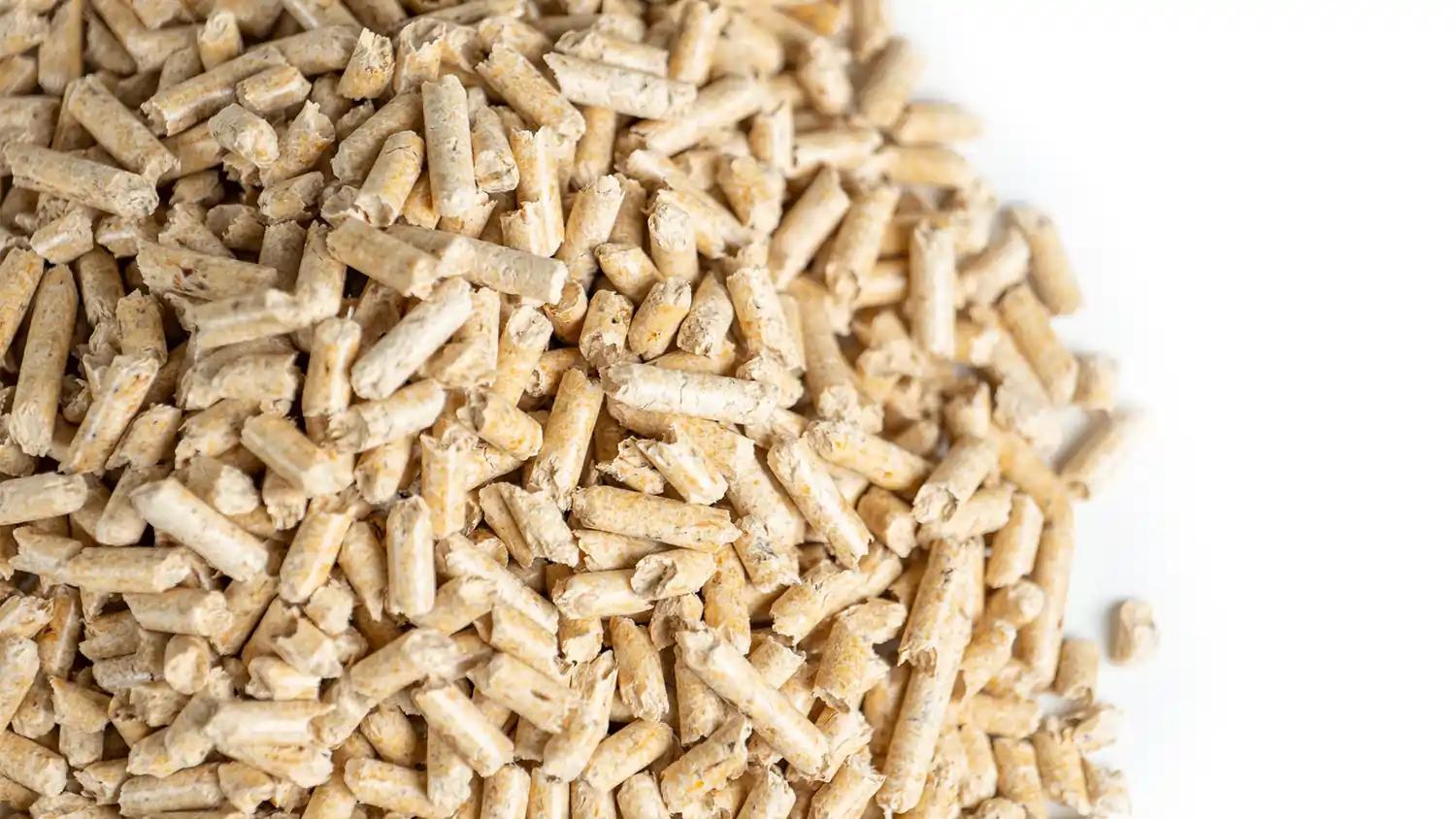
The choice of pellets affects heating costs, ease of use, and boiler cleaning. The question of which type to choose—oak or pine—arises when purchasing fuel. They differ in their properties, combustion characteristics, and the amount of ash left behind.
Key points from this article:
- Pine and oak pellets differ in their combustion properties, ash content, and how they perform in a boiler.
- Pine pellets ignite more quickly, leave less ash, and often work better in modern automatic boilers.
- Oak pellets are heavier, burn more steadily and for longer, but may require more frequent cleaning of the boiler.
- Calorific value alone is not enough to assess pellet quality — moisture content, composition, and quality certifications are also of great importance.
- In the case of hardwood pellets, it’s worth checking the actual oak content, as blends of various wood species are available on the market.
- ENplus A1 and DINplus certifications help assess fuel quality and reduce the risk of boiler problems.
- Not every pellet boiler is designed to burn hardwood pellets, so it’s a good idea to check the manufacturer’s recommendations before purchasing.
- Choosing the right pellets affects not only heating costs but also the comfort of use and the boiler’s service life.
- A modern pellet boiler allows for more efficient use of fuel and reduces the amount of residue and ash.
How do pine pellets differ from oak pellets?
The biggest difference stems from the type of wood used to produce the pellets. Pine pellets are made from coniferous wood, while oak pellets are made from hardwood. In practice, this results in different combustion and performance characteristics.
Pine pellets:
- contain more natural resin,
- ignite more quickly,
- leave less ash,
- are lighter and easier to feed through feeders.
Oak pellets:
- are heavier and denser,
- burn more steadily and for longer,
- withstand storage in harsher conditions better,
- may leave more ash.
Many people assume that hardwood always makes for better fuel. In the case of pellets, however, this is not so obvious. The production process means that the combustion properties of both types of pellets can differ significantly from those of traditional firewood.
Which pellets are better—pine or oak—in terms of caloric content?
The answer is not clear-cut, as both types of pellets have good energy performance.
Pine pellets typically have a calorific value of about 18–19 MJ/kg, while oak pellets can reach as high as about 19–20 MJ/kg. These differences stem, among other things, from the higher density of hardwood and the presence of resin in softwood pellets.
In practice, this means that:
- pine pellets release heat more quickly,
- oak pellets can burn longer and more steadily,
- actual efficiency also depends on the quality of production and the moisture content of the pellets.
Therefore, this question should be considered not only in terms of calorific value alone, but also in terms of compatibility with the pellet boiler
Are pine pellets better for automatic boilers?
In many modern automatic boilers, pine pellets perform very well. This is due to their lower ignition temperature and lower ash content.
As a result:
- the ignition process takes less time,
- the heater consumes less energy,
- the fuel feeding system operates more smoothly,
- the boiler requires less frequent cleaning.
Oak pellets have a higher ignition temperature, so in some boilers the ignition process may take longer. In practice, this can put more strain on the components responsible for ignition.
Important: Before purchasing hardwood pellets, it’s a good idea to check the boiler manufacturer’s recommendations. Some boilers are designed primarily for softwood pellets.
Which pellets leave less ash?
In terms of combustion cleanliness, pine pellets generally perform better. They leave less ash behind after burning than oak pellets.
This is an important difference because it affects:
- the frequency of stove cleaning,
- the risk of clumping,
- and the convenience of daily boiler operation.
With oak pellets, the amount of ash is usually greater, and with low-quality fuel, clumps may form, hindering proper combustion.
What should you look for when buying pellets?
Whether you choose softwood or hardwood pellets, the most important factor is the quality of the fuel. Cheap pellets without certifications can cause boiler malfunctions and reduce heating efficiency.
Before purchasing, it’s a good idea to check:
- ENplus A1 or DINplus certification,
- ash content,
- moisture content of the pellets,
- raw material composition,
- uniform color and structure of the pellets.
In the case of oak pellets, it’s also a good idea to verify the actual oak content. There are blended products on the market that contain only a portion of oak.
Pine or oak pellets—which should you choose in the end?
There is no one-size-fits-all solution for every home and every boiler. When choosing between pine and oak pellets, it’s best to base your decision primarily on the specifications of your heating system and your own expectations regarding comfort of use.
Pine pellets often perform better in modern automatic boilers thanks to easier ignition and less ash. Oak pellets can be a good choice for those who prefer longer and more even burning.
Choosing the right pellets is one thing, but it’s equally important to pair them with a modern, reliable heating system. A high-quality pellet boiler allows you to use fuel efficiently, reduce fuel consumption, and enhance the comfort of everyday use.
Check out Stalmark pellet boilers and choose a solution tailored to your home’s needs.
FAQ
Does the color of pellets indicate their quality?
Not always. The color may depend on the type of wood and the production process. Quality certifications, moisture content, and the ash content declared by the manufacturer are much more important.
Can pellets be stored year-round?
Yes, provided they are stored in a dry place and protected from moisture. Properly stored pellets retain their properties for a long time.
Do more expensive pellets always mean better quality?
No. The price may depend on the type of wood, the availability of raw materials, or the manufacturer’s brand. In practice, it’s best to focus on technical specifications and certifications rather than just the purchase price.