The pellet stove does not feed fuel, the fire goes out, and the feeder stops working? This may be a minor malfunction, but the consequences can be serious. See what to do when pellets block in the pipe or clog the feeder, and how to quickly restore stove operation!

1. before you spin anything - stop the boiler and check the feeder
If you notice that the stove stops working properly, turn it off completely. Remove the housing and look at whether the feeder auger turns freely. In many cases, when pellets clog the feeder, a simple mechanical blockage is to blame, such as a stuck piece of wood, parched dust or clumped pellets.
2. carefully plug the feed tube
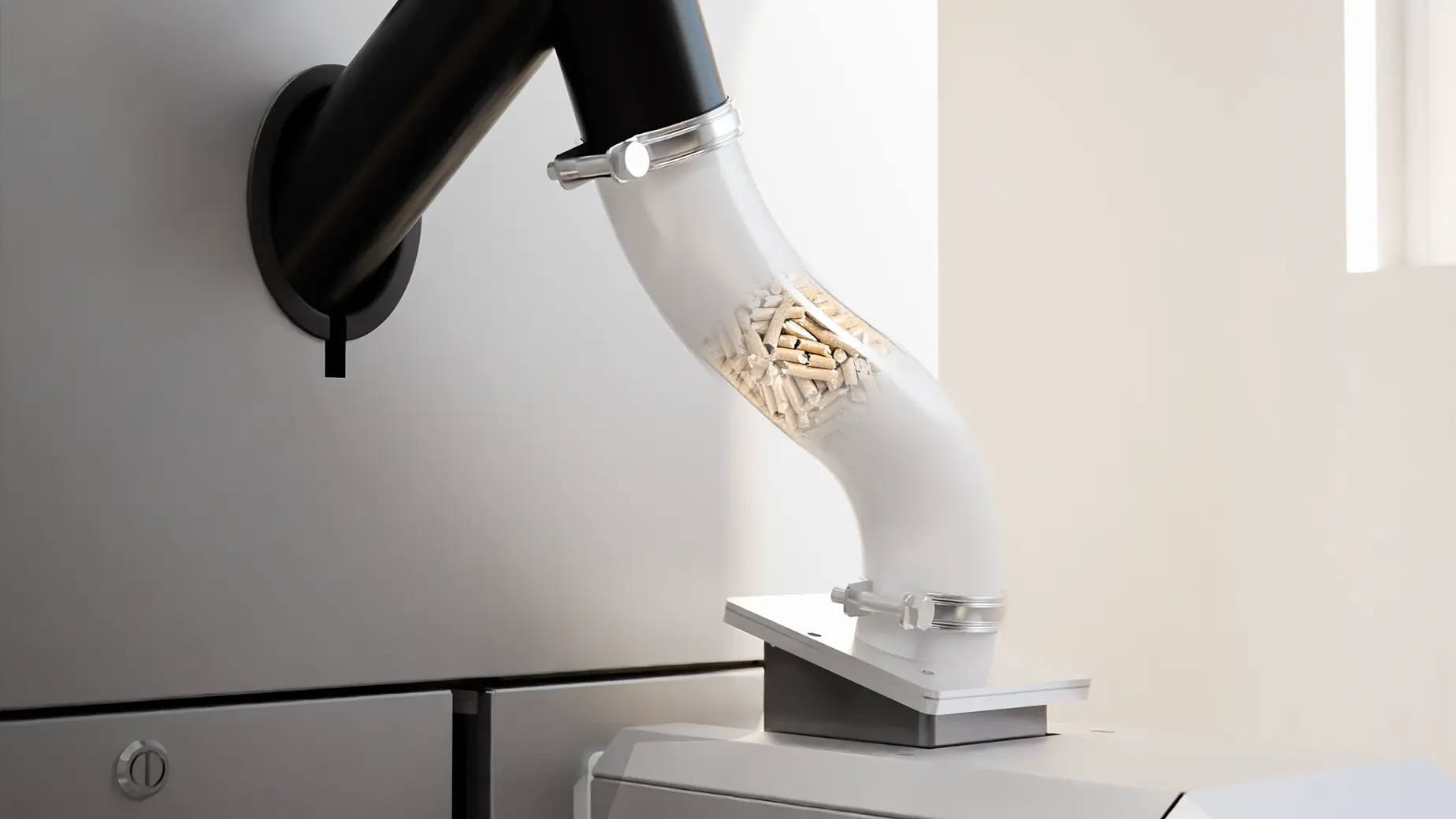
If you suspect that the pellets are blocking in the pipe, first remove the residual fuel from the hopper. Then try to cut the pipe leading the pellets to the auger, preferably with a soft, flexible rod. Be careful not to damage the walls or parts that transmit movement. Do not use anything sharp or hard. Such "help" can do more harm than good.
Check out Stalmark pellet boilers and get a free consultation

3. inspect the quality of the pellets - this is a common cause of problems
The best way to avoid failure? Good raw material. If you regularly see pellets clogging the feeder, take a look at what you're actually pouring into the hopper. Pellets that are too fine, dusty or soggy clump very easily and lodge in the pipe. It is therefore worthwhile:
- check that the pellets have a uniform fraction (6-8 mm diameter),
- avoid bags with a lot of dust or crushed pellets,
- store the pellets in a dry place, away from moisture.
Note that certified pellets (such as ENplus A1) minimize the risk of problems.
4. take a look at the oven settings and feed time
The problem is not always due to mechanics. Fuel feed intervals that are too long or faulty controller settings can lead to smoke backflow, pellet clumping and feeder clogging. Check the manual to make sure the current feeding times and intervals between cycles are in accordance with the manufacturer's recommendations. If in doubt, contact the service center or stove manufacturer.

5. regular maintenance is essential
Even the best pellets and a properly set stove will not work properly if the feeder and tube are not cleaned regularly. Sediment, soot and dust accumulate over time and can cause difficulties with fuel flow. A good practice is:
- removing pellets from the hopper every few days;
- cleaning the auger and feeder chamber once a week (remember to disconnect the boiler from power);
- full maintenance of the system (including the pipe) every few weeks - depending on the intensity of use.
6. tank and pipe - are they properly sloped?
If the angle of the feed tube is too low, it can cause the pellets to block in the tube due to gravity. Check that the tube is not too flat or does not have "kinks" that impede the movement of pellets. If necessary, you can gently modify the alignment of the tube. It is important that the pellets flow freely, without being pressed or pushed.
What next when the problem persists?
If, despite cleaning, changing the pellets and adjusting the parameters, the problem returns, it is worth consulting a professional. It may turn out that the pipe is too narrow, the feeder is mismatched to the type of fuel, or the engine is not running at the right power. Diagnostics by an authorized service will help you avoid costly failures and extend the life of the entire installation.

FAQ
**1. Is it worth using anti-caking additives for pellets?
Yes, for low-quality pellets, you can consider using anti-caking additives. They help reduce pellet sticking and reduce the risk of feeder blockage, especially in humid environments.
**Does the length of the feeder pipe affect blockages?
Definitely yes. The longer the pipe, the greater the risk of blockage - especially if the pellets do not have a perfectly smooth surface. In installations with a large distance between the hopper and the burner, it is worth using a stronger auger drive or thinking about changing the layout.
**Does the type of feeder drive (electric vs. pneumatic) matter?
Yes. In pneumatic systems, blockages are less frequent, but require more sophisticated installation and filtration. In standard screw-drive stoves, regular cleaning and selection of the right pellets are key - otherwise it's easy for the system to become clogged.