In our guide we explain how to choose the power of the boiler, what to pay attention to in the technology, the cost of purchasing and consumption of pellets, and how to choose a solution from the Stalmark offer.
What you will learn in this article?
Read the article and you will learn how to calculate the required power of a pellet stove for a 120 m² house, depending on the insulation and conditions of the building. You will see the advantages of stoves with a feeder and how models with power modulation differ from those without. We will also help you determine the approximate cost of purchasing a unit and its subsequent operation, and highlight the key features you need to pay attention to when buying a boiler.
Why choosing the right stove power is important
Selecting the right furnace power directly affects thermal comfort throughout the house, so you can't treat this step superficially. An improperly selected furnace can lead to excessive operating costs and inefficient space heating. Before you go on to choose a specific model, learn about the most important factors that affect the heating requirements of a building. Below you will find a list of elements to evaluate before purchasing a unit.
- Assessment of the state of insulation of the building - a modern house with good insulation needs less power than one that remains uninsulated.
- Calculation of the volume to be heated - it is important that you know not only the area of the building, but also the height of all its rooms.
- Consideration of climate zone and outdoor conditions - the colder it is and the more heat loss, the more unit power you will need.
- Power reserve for colder days - we recommend choosing a furnace a little more powerful to ensure stable heating during periods of severe frost.
After analyzing these factors, it will be much easier to determine the right power range for a house of 120 m². The optimal unit will ensure more economical and stable operation of the entire heating system.
Checklist: Did you choose the power of the furnace correctly?
1 Did you check the insulation of the walls, roof and foundation? 2 Did you calculate the volume, not just the square footage? 3 Did you take into account the local climate and typical temperatures? 4. Did you provide for a minimum of 10-20% power reserve? 5. Did you compare data from several calculators or sources?
How much power does a 120 m² house need - approximate calculations
To determine the appropriate stove wattage, use the general guidelines for the thermal requirements of buildings with a certain standard of insulation. For 120 m² houses, the values vary depending on whether the building is modern, retrofitted or older. The following overview will give you a quick idea of the appropriate power range for a pellet stove typically used in this type of home.
- Well-insulated house → about 8-10 kW (depending on the type of insulation).
- A moderately insulated house → about 10-15 kW.
- Home poorly insulated or in cold climates → 12-15 kW.
With this breakdown, you can pre-determine the wattage before going on to choose a specific model. Of course, these are approximate values, but in practice they work well as a starting point.
Why buy a stove with a feeder from us (Stalmark)
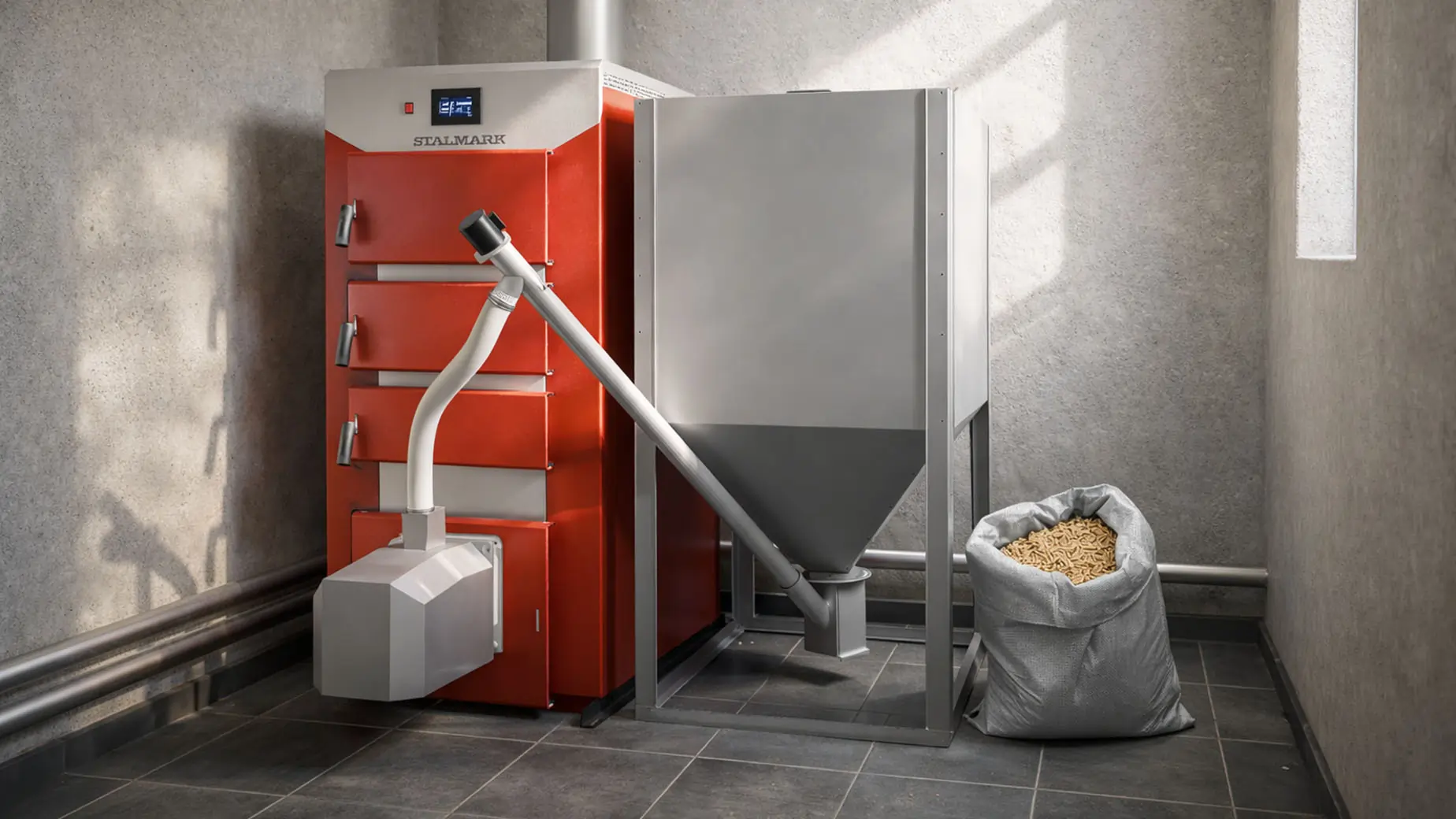
A stove with a feeder is a solution that significantly increases the comfort of the heating appliance. The high automation of the system makes you spend much less time on operation, while receiving a stable, economical level of combustion. At Stalmark, we offer models that have all these advantages, in addition to being durable, well-made and characterized by the following features:
- they automatically feed pellets, providing a high level of convenience for daily operation;
- are compliant with Class 5 and ECODESIGN standards;
- have a durable construction and operate through proven technical solutions;
- they are exceptionally diverse - we provide models with different capacities that you can easily fit into a 120 m² house.
These features make the furnaces of our Stalmark brand applicable in many homes and the choice of dedicated users who appreciate them for their stability and efficiency. But how do you choose the technology with which the unit is equipped? In the rest of this article we will discuss what you should pay attention to when comparing different furnace technologies.
Advantages and features of pellet boilers - what to look for
Pellet stoves are gaining popularity due to their high efficiency and convenience of use. However, we encourage you to learn more about their key advantages before you make a purchase decision. What should you look at?** Here's a list of features!
- High efficiency and fuel economy - modern stoves achieve high efficiency without consuming excessive amounts of pellets.
- Automation and convenience of operation - the feeder, igniter and weather controller facilitate the daily use of the unit, making it almost maintenance-free.
- Ecology and clean combustion - Class 5 and ECODESIGN units do not release excessive pollutants into the atmosphere.
- Possibility to adjust the power to your needs - a wide selection of models allows you to choose the perfect stove.
Such features mean that a well-chosen stove can work stably and predictably for many years. An informed choice is a guarantee of lower bills and greater comfort.
Power modulation or constant power furnace?
What is power modulation and why can it be useful in daily home heating? A modulating stove can adjust its power on its own according to the current energy demand of the building. It works more economically and quietly, while maintaining a stable temperature, increasing savings especially in well-insulated houses. A fixed-power furnace may be cheaper, but less flexible, and therefore slightly more expensive to operate.
Understanding these differences allows you to make an informed decision on the choice of appliance. In many homes, especially new and well-insulated ones, modulation significantly improves combustion economics. In older homes, a simpler design may nevertheless work well if the budget is limited.
A few technical issues still worth considering
The selection of furnace power alone is only one part of the decision-making process. Technical, utility and economic considerations are equally important. Before you make a final decision, study some additional issues. Take a peek at:
- The quality of the feeder and controller in a given model;
- The feasibility of positioning the hopper and the optimal installation location;
- The quality of the pellets and their real availability in the area;
- Access to service and length of warranty;
- Options for retrofitting the stove with automation or an Internet module.
Becoming aware of these aspects will help you avoid problems after purchasing a unit. A pellet stove is an investment for years, so don't just look at the price, but check how convenient it will be to use on a daily basis.
Checklist: One last check before buying
- Does the chosen stove fit the dimensions of the boiler room?
- Do you have convenient access to the hopper and service door?
- Do you know what kind of pellets the manufacturer recommends and will you buy them locally?
- Does the manufacturer's service work in your area?
- Are all costs (stove + installation + chimney + equipment) within budget?
- have you compared a minimum of three models of similar power?
Approximate boiler and operating costs
A pellet boiler is an expensive appliance, isn’t it? However, the total cost of purchase and installation can vary. You’ll determine the final amount by specifying the technology, output, and efficiency class of the unit. On top of that, you need to factor in operating costs, primarily the price of pellets and your annual consumption. So pay attention to:
- the cost of purchasing the stove—it depends on the power, class, and features;
- annual pellet consumption—the amount depends on the level and quality of your home’s insulation and the efficiency of the unit;
- the optimal power range—the investment pays for itself faster when the stove operates within the correct range.
This overview allows you to take a broader look at heating costs. It’s not just about the price of the unit, but also its efficiency and future fuel expenses. A properly selected stove can significantly reduce your annual heating budget. Just take a look at our selection, and you’ll see which of the available models fit within your budget. The cost of our units ranges from 8,000 to 16,000 PLN.
Why consider Stalmark's offering - a summary of our strengths
We are a manufacturer with many years of experience and have specialized in the manufacture of modern heating equipment for years. Our company offers class 5 stoves in accordance with the requirements of ECODESIGN, so we guarantee ecological and efficient combustion.
The design of our stoves is distinguished by durability, refinement and adaptation to intensive use. We also provide a wide range of models of different capacities, equipped with modern automation, which allows convenient control of the unit. Each of them also has the necessary certificates confirming safety and efficiency.
Practical tips - how to prepare a 120 m² house for pellet heating
Before installing the stove, make sure that the house and boiler room are properly prepared. Proper placement of the unit and pellet hopper increases the safety and convenience of the unit. Also take care of technical issues that will improve the efficiency of the heating system. Here are the steps you need to take to properly prepare your building for stove installation.
- Evaluate the insulation of the building and plan for possible upgrades.
- Prepare a place for the stove and storage tank.
- Buy good quality pellets from a trusted supplier.
- Schedule service and cleaning routines for the unit.
- Check if you have the option of installing a remote or weather control.
This preparation allows you to get the most out of your stove and reduce operating costs.
Choosing a pellet stove for a 120 m² house requires considering many factors, but with the right guidance the process becomes much simpler. A well-chosen stove will guarantee thermal comfort, low heating costs and satisfaction for many years.
FAQ: How to choose a pellet stove for a 120 m² house - a practical guide.
1. How much pellets are needed to heat a 120 m² house?
Typically, a 120 m² house consumes 3 to 5 tons of pellets per year, depending on the insulation and efficiency of the stove. Modern buildings can consume even less, especially with well-chosen appliance power.
2. How much does a pellet stove cost for a 120 m² house?
The price of a pellet stove from our company (Stalmark) is usually in the range of PLN 8,000 to 16,000, depending on the power, class and equipment. Models with automatic power modulation and a feeder can be more expensive, but provide higher efficiency.
3. What is the best pellet stove for a 120 m² house?
The best will be a stove with a power matched to the insulation of the building - usually in the range of 12-15 kW. Highly rated are models with power modulation and automatic fuel feeding, especially from proven manufacturers such as Stalmark.
4. Is the pellet stove cost-effective compared to other heat sources?
A pellet stove is cost-effective due to its relatively low fuel costs and high combustion efficiency. In addition, the possibility of automation makes use convenient and predictable.
5. How often does a pellet stove need to be cleaned?
Normally, basic cleaning is done every few days, and more thorough cleaning every few weeks. Modern stoves have systems that make cleaning easier, which reduces service time.
6. Can the pellet stove also heat domestic water?
Yes, most pellet stoves can work with a hot water storage tank. Thus, one device can operate the entire heating system in the house.
7. Is pellets environmentally friendly?
Pellets are a renewable fuel and have relatively low emissions. Stoves that meet ECODESIGN standards further reduce dust and CO₂ emissions.
8. What class of pellet stove is worth choosing?
It is best to choose class 5 or ECODESIGN-compliant devices, as they guarantee the highest efficiency and lowest emissions. An additional advantage is the possibility of obtaining subsidies for such a purchase.
9. Does a 120 m² house need power modulation in the boiler?
Power modulation allows the stove to operate at exactly the intensity needed at any given time, which reduces pellet consumption. In well-insulated houses, this results in noticeable savings.
10. How long does a good pellet boiler last?
A well-used and regularly serviced stove can last up to 10-20 years. However, the lifespan depends on the quality of materials and proper operation.