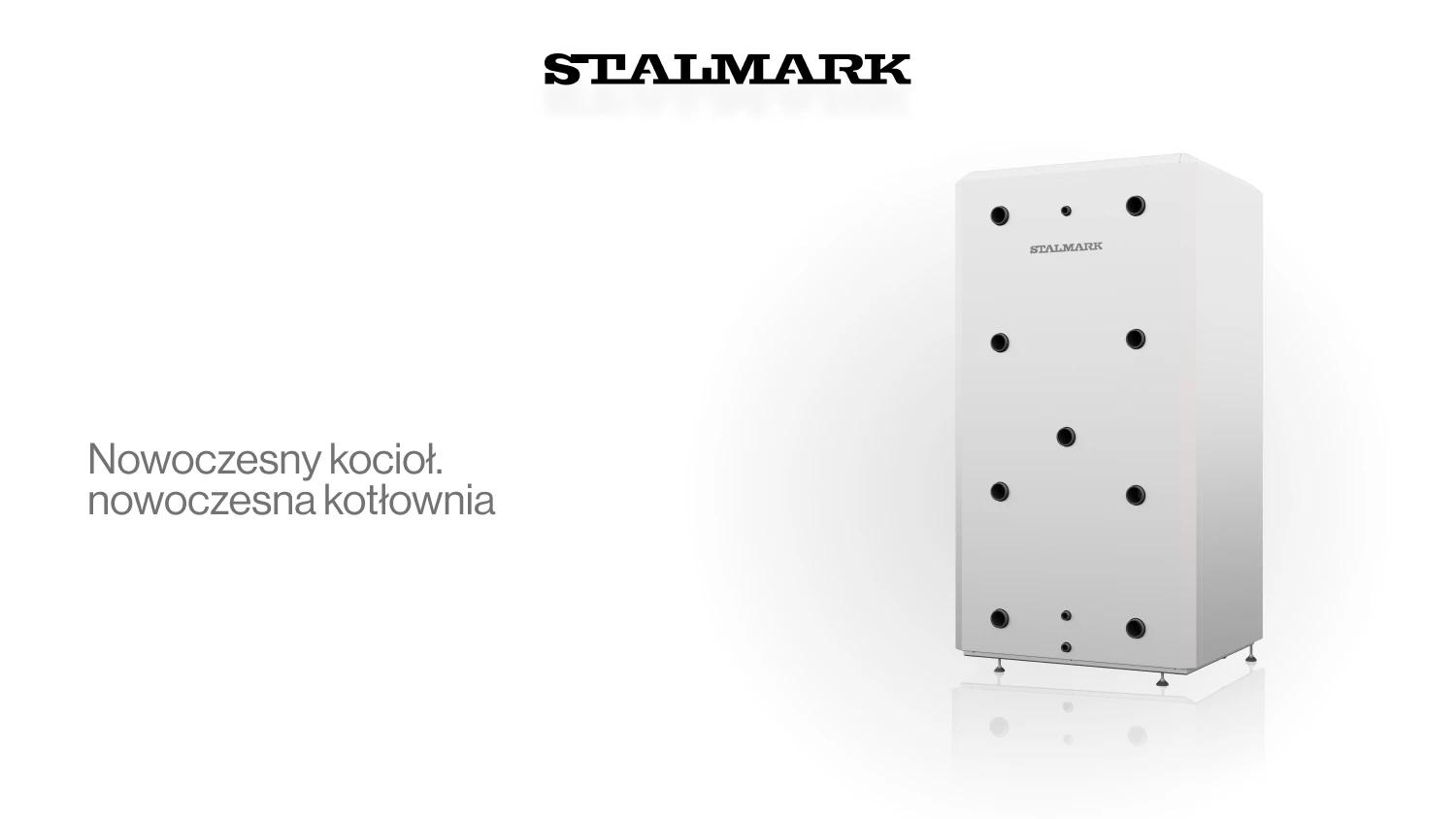
How to choose the heat buffer capacity for the boiler output and building needs? We explain what the tank size really depends on, why a simple liters per 1 kW conversion factor is not always enough, and what to look for before buying.
Introduction
Choosing a heat buffer should not start with the question '500, 800 or 1000 liters?'. First, you need to determine how much energy the heat source generates above the building's current demand, how long this surplus is to be stored, and in what temperature range the system can operate. Only these data reveal the actual tank capacity. If you want to organize the basics first, see how a heat buffer works
You can read more posts like this on our blog - check it out!
Key information
- Buffer capacity depends not only on the boiler power, but also on the minimum heat consumption, the way the source operates, the temperature range, and the expected energy storage time.
- Simple conversion rates in liters per 1 kW can be a helpful benchmark, but they do not replace device documentation or system calculations.
- In modulating sources, such as some pellet boilers and heat pumps, the minimum stable power of the device is of particular importance, not just the nominal power.
- For wood gasification boilers, the amount of energy released from a full charge of fuel is also important.
What are we actually sizing when choosing the buffer capacity?
The buffer is an energy store in a water system. When the heat source produces more energy than the building currently consumes, the surplus raises the water temperature in the tank. Later, the system can use this energy without immediately starting the boiler or heat pump. In practice, the capacity is therefore selected based on the difference between heat production and consumption, and not just a single number on the device's nameplate.
Water has a high heat capacity. Simply put, 1 liter of water stores about 1.163 Wh of energy for every 1°C temperature difference. This means that 1000 liters of water working in a usable range of 30°C can theoretically store about 34.9 kWh of energy. This calculation shows the scale of the storage, but an actual design must take into account, among other things, losses, temperature stratification, control, and allowable temperatures of the source and receivers.
Why can a simple liters per 1 kW ratio be misleading?
In the industry, recommendations are often based on the ratio of tank capacity to boiler power. In specific manufacturer documentation, values of around 50–55 l/kW can be found for selected wood boilers. Such a conversion ratio only makes sense in the context of the devices for which it was given. It should not be automatically transferred to any pellet boiler, heat pump, or system with completely different characteristics.
The reason is simple: two 20 kW sources can operate completely differently. A manual batch boiler can deliver a large amount of energy from a single full load of wood in a short time. A pellet boiler can modulate its power and limit heat production. A heat pump can also change capacity and additionally has specific requirements regarding minimum water volume and flow. Therefore, the same nominal power does not mean the same storage demand.
5 data points needed for proper buffer tank sizing
- Power output and characteristics of the heat source. It is not only the maximum output that counts, but with a modulating unit also the minimum stable power at which it can operate without switching off.
- Minimum instantaneous demand of the system. A house may need over a dozen kilowatts on a freezing day, but during transition periods or when heating a single zone, consumption can drop to a few kilowatts or even lower.
- Usable temperature range of the buffer. The larger the safe temperature difference that can be used, the more energy the same volume of water holds. The range depends on the type of source, heat emitters, and automation.
- Expected operating or storage time. A different tank will be needed to smooth out short cycles of a few minutes, and a different one to store energy from a full load of wood for many hours.
- Manufacturer requirements and system hydraulics. Minimum capacities, return temperatures, flow rates, and the method of connecting the buffer tank should be checked in the operation and maintenance manual of the device and in the system design.
How to estimate buffer tank capacity step by step?
Step 1: calculate the surplus power
If the heat source currently delivers 20 kW and the system absorbs 8 kW, there remains about 12 kW to be stored. If this situation lasts for two hours, the theoretical surplus energy is 24 kWh. This is the energy the buffer tank should absorb if we want to avoid throttling or shutting down the heat source during this period.
Step 2: determine the usable temperature difference
Assuming a usable range of 30°C, storing 24 kWh theoretically requires around 690 liters of water. When the range drops to 20°C, the required volume increases to about 1030 liters. Thus, it is clear why an identical building may require a different capacity depending on the operating temperatures of the system.
Step 3: compare the result with the device documentation
The energy calculation is a starting point, not the final selection. The manufacturer may specify a minimum capacity, required return protection method, minimum flow rate, or a specific hydraulic scheme. In the case of pellet boilers and wood gasification boilers, the operation method is different enough that selection rules should not be copied between technologies.
Step 4: check whether the selected tank can be correctly integrated into the system
Capacity must go hand in hand with hydraulics. What matters is the number of stubs, their arrangement, insulation, the option to install sensors and a heating element, and space in the boiler room. Stalmark's offer includes both heat buffer tanks and designed for larger systems.
How does buffer tank selection change depending on the heat source?
Buffer tank for a wood gasification boiler
When sizing, one should primarily take into account the energy from a full fuel load, boiler output, minimum operating temperature of heat emitters, and system operation method. The buffer tank mainly serves to absorb surplus energy and allows the boiler to operate under favorable combustion conditions.
Buffer tank for a pellet boiler
The most important factors are the minimum modulation power of the boiler, the number of heating zones, water capacity of the system, and manufacturer requirements. The buffer tank helps reduce short boiler operating cycles, hydraulically stabilizes the system, and allows for storing smaller energy surpluses.
Buffer tank for a heat pump
In this case, key considerations include the minimum required water volume in the system, minimum flow rate, number of isolatable zones, and defrosting requirements. A buffer tank can increase the water volume of the system and stabilize the flow. However, a large buffer tank acting as energy storage is not always necessary.
What happens when the buffer tank is too small?
- The heat source may start and stop more frequently if the instantaneous heat demand is lower than its minimum output.
- With a wood boiler, the tank may not be able to absorb the energy from a full combustion cycle, making it difficult to operate the boiler under optimal conditions.
- The energy reserve available after the heat source is extinguished is reduced.
- In multi-zone systems, the system's ability to cushion rapid load changes decreases.
Can an oversized buffer tank also be a problem?
A larger tank is not automatically better. It takes up more space, costs more, and has a larger surface area through which standing losses occur. With a low-power boiler, a very large buffer tank can take a long time to charge. That is why technical documentation emphasizes maintaining an appropriate relationship between heat source output and charging time as capacity increases.
Checklist before buying a buffer tank
- What is the nominal and minimum output of the heat source?
- What is the calculated heat demand of the building and the smallest instantaneous load on the system?
- What flow and return temperatures are required by the heat source and heat consumers?
- Does the manufacturer specify a minimum or recommended buffer capacity?
- Can all heating zones close simultaneously?
- Is the buffer intended to store energy for many hours, or primarily to stabilize the operation of the heat source?
- Is there enough space in the boiler room for the tank and service access?
- Is a coil, heating element, or additional connections for another heat source needed?
Expert insight: calculate energy first, only then litres
The most common mistake is starting the sizing process with available commercial capacities. A better approach is the reverse: first, determine the energy that needs to be absorbed, the minimum allowable runtime of the heat source, and the usable temperature range, and only then select the nearest technically justified capacity. As a result, the buffer tank is not 'large just in case', but performs a specific job in the system.
FAQ
How many litres of buffer capacity per 1 kW of boiler output?
There is no single value suitable for all heat sources. Some wood boiler manufacturers use rough guidelines of 50–55 l/kW, but for a pellet boiler or heat pump, the criteria can be completely different. The documentation of the specific device and the system design take priority.
Does a larger buffer tank always reduce fuel consumption?
No. A buffer tank can improve the operating conditions of the heat source and reduce unfavorable cycling, but an oversized tank does not create extra energy. Its effectiveness depends on whether the system actually utilizes the increased storage capacity.
Can two smaller buffer tanks be connected instead of one large one?
Yes, in a properly designed system, the required volume can be built using several tanks. However, correct hydraulics, balanced flows, insulation, and proper placement of sensors must be maintained.
Does buffer capacity depend on the size of the house?
Indirectly. Floor area alone is not sufficient for sizing, as two houses of the same size can have vastly different heat losses. The calculated heat demand and the operating characteristics of the heat source are much more important.
Summary
Proper buffer tank selection combines three perspectives: energy balance, heat source requirements, and system hydraulics. Boiler output is important, but alone it does not answer the question of tank capacity. If you are planning a boiler room modernization, check the available Stalmark heat buffer tanks and, before selecting a specific variant, compare the tank parameters with the heat source documentation and installer calculations.
Read also: Which buffer tank for a wood gasification boiler?